Welcome to the GAIA Lab Retreat website!
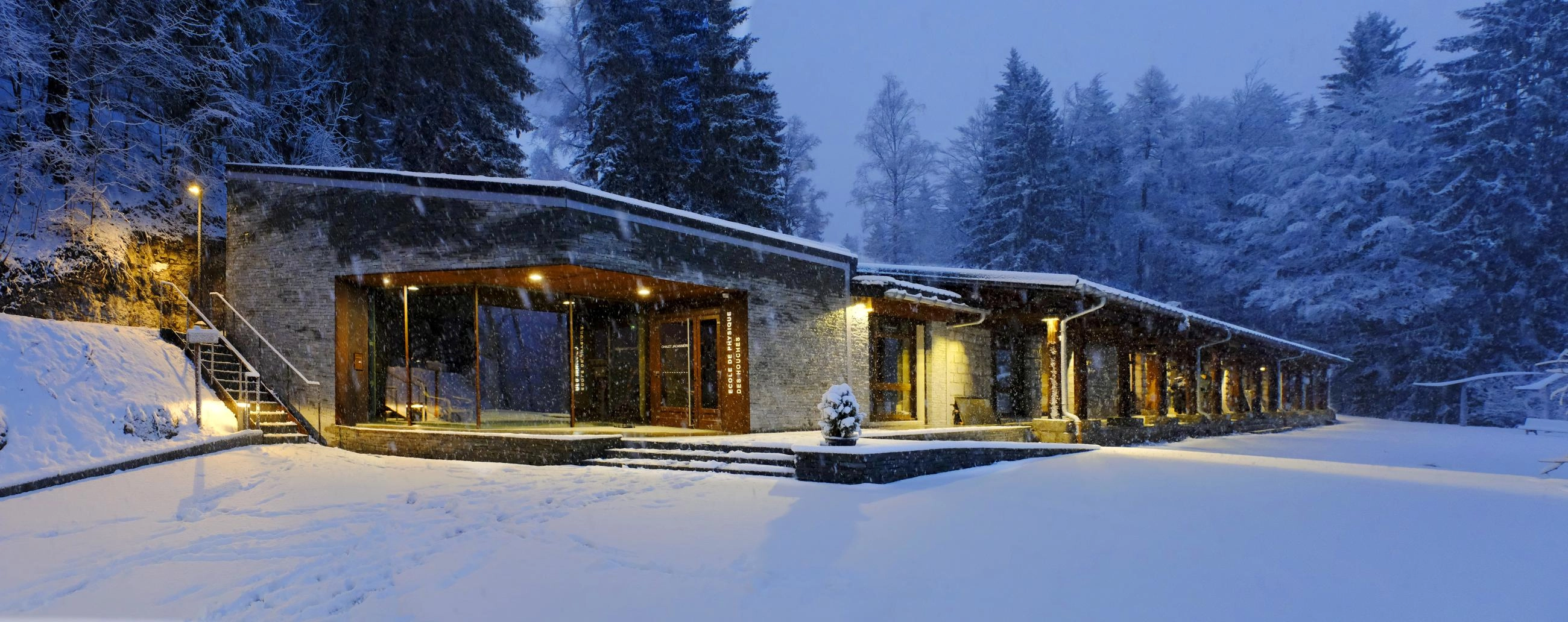
Hosted at the École de Physique des Houches in the French Alps, the retreat is designed as an open, collaborative, and interactive space combining scientific discussions, hands-on work, and informal exchanges in an inspiring mountain setting.
This is not a traditional conference. It is a retreat: an off-site gathering designed to foster open exchange, collective learning, and the emergence of new ideas and collaborations beyond our usual day-to-day working environment. The program will combine invited presentations, practical sessions, and ample time for cross-disciplinary discussions.
Importantly, the retreat will also provide an opportunity to present and formally launch the AI Working Group, a new initiative aimed at bringing together researchers and engineers with shared interests in data-driven and AI-based approaches to Earth and planetary sciences. The group will focus in particular on AI-related teaching, model development and storage, shared computational and educational resources, and good practices within our community.
Scientific rationale
Our current understanding of the Earth system is increasingly challenged by the complexity of the processes we seek to unravel. Over the past two decades, advances in instrumentation have greatly improved our ability to observe natural phenomena with unprecedented spatial, temporal, and spectral resolution. At the same time, the rapidly growing volume of available data has led to the development of curated repositories that now serve the entire scientific community.
Yet our ability to fully interpret and model these high-resolution observations remains limited by the lack of comprehensive frameworks capable of capturing the multiscale and multiphysics couplings revealed by these data.
We now find ourselves at a pivotal moment, where strengthening our expertise in artificial intelligence (AI) has become essential to address the next generation of scientific challenges. Emerging AI approaches offer powerful new opportunities to extract information from complex datasets, bridge spatial and temporal scales, and integrate observations with physical models, opening new pathways for scientific discovery.
With the GAIIA Lab Retreat, we aim to support this transition and strengthen our collective expertise. The retreat will provide a space for sharing experiences, discussing recent developments, and exploring both theoretical and practical advances in AI methodologies tailored to our disciplines.
This will be the first edition of the retreat, but we hope to establish Les Houches as a regular venue for future editions.
Tentative program

Discussions, presentations, and hands-on sessions will focus on the following scientific themes. Please note that the scope of the sessions is still tentative and may evolve. If you would like to share ideas or suggest additional topics, please feel free to contact us.
- Volcanic system dynamics and eruption forecasting
- Seismic signal analysis and earthquake detection
- Hydrological responses to extreme climatic events
- Planetary surface modelling and remote sensing
- AI methodologies for image analysis, time-series modelling, and physics-informed learning
- Use of local large language models (LLMs) for extracting and structuring information from complex datasets
Call for contributions
The call for contributions is now open (see link below).
The program will be updated regularly as contributions are received and the scientific sessions take shape.
Fees and practical information
Accommodation and full board for the entire stay at Les Houches are expected to cost approximately €330 per participant.
Please note that registration through Indico currently constitutes a pre-registration only and does not yet guarantee a place at the school. The number of participants is limited to 69 people, and we are at maximum capacity. Don't worry GAIA 2028 is already on track.
The procedure for final registration and payment will be communicated by email very soon. Participants will receive a link to the École de Physique des Houches registration and payment platform. Participation will be considered officially confirmed only once the required accommodation and full-board fee has been paid. New registration will be there open if anyone discard their registration.
Participants are responsible for arranging and covering the cost of their travel to and from Chambéry. To facilitate the final part of the journey, we are planning to organise a shuttle between Chambéry TGV railway station and Les Houches, with a departure from Chambéry at approximately 10:00 on Wednesday and a return to Chambéry on Friday afternoon, leaving the school at around 15:00 and arriving in Chambéry at approximately 16:30.
Further logistical details, including the final shuttle schedule and the registration/payment procedure, will be communicated as soon as they are confirmed.
In the meantime, please consult the official Les Houches website for information about facilities, access and your stay.
Support
We acknowledge the support from: